

A Trend building management system, formally known as Trend BEMS (Building Energy Management System), is a modular platform developed by Trend Controls, a brand within Honeywell Building Technologies, that centralises control of HVAC, metering, and building services across single or multi-site estates. For UK facilities managers, three points matter most: Trend systems are backwards compatible across generations, meaning legacy Trend 963 sites can migrate incrementally to the IQ series without wholesale replacement; the platform includes energy dashboards and analytics that surface savings opportunities and support ESG reporting; and any upgrade or retrofit requires a supplier-led site survey before specification.
The practical next step for most estates is to commission a site survey, prioritise remote monitoring, and establish a planned preventative maintenance (PPM) schedule. If you manage multiple sites, standardise on a supervisor template during a pilot phase before rolling out across the estate.
- What it is: A modular BEMS platform centralising HVAC, metering, and building controls.
- Energy benefit: Automated setpoints, occupancy scheduling, and analytics reduce consumption measurably.
- Upgrade implication: Backwards compatibility means phased migration is viable; a full rip-and-replace is rarely necessary.
- First action: Commission a site survey to establish your asset baseline and network readiness.
Pro Tip: If you operate more than four sites, build and lock a supervisor template on a pilot site first. That single step typically cuts subsequent site commissioning time significantly and reduces reactive call-outs across the estate.
What does a trend BEMS include in practice?
Trend Controls organises its platform into three layers: field controllers, supervisory software, and supporting hardware. Understanding each layer helps you match product names to datasheets and tender documents.
Field controllers are the devices installed at plant level, reading sensors and executing control sequences.
- IQ5: The current flagship controller, offering flexible, secure, prioritised control for demanding commercial applications.
- IQeco: A cost-effective controller suited to simpler plant configurations where full IQ5 capability is not required.
- IQX12: A scalable controller for advanced building control requirements, bridging mid-range and enterprise deployments.
- Trend 963 (legacy): An older controller generation still present across many UK estates; fully supported for phased migration to the IQ series.
Supervisory and visualisation software sits above the controllers, aggregating data and presenting it to operators.
- IQVISION Supervisor: The current graphical supervisory platform, providing real-time visualisation, alarm management, trend logging, and setpoint control from a single interface.
- 963 Supervisor (legacy): The predecessor supervisory layer, still operational on many sites and upgradeable to IQVISION without replacing field controllers.
Supporting hardware and connectivity completes the system.
- Trend wall bus sensors: Environmental monitoring devices feeding accurate temperature, humidity, and CO₂ data to controllers.
- TONN: Trend’s integration module for connecting building systems and enabling efficient cross-system control.
- Metering and connected power: Outlet-level monitoring and sub-metering for granular energy visibility.
- Network media: Ethernet and TCP/IP are the standard connection methods for IQ4, IQ5, and IQVISION, enabling straightforward IT integration where network policies permit.
What energy and operational benefits does trend BEMS deliver?
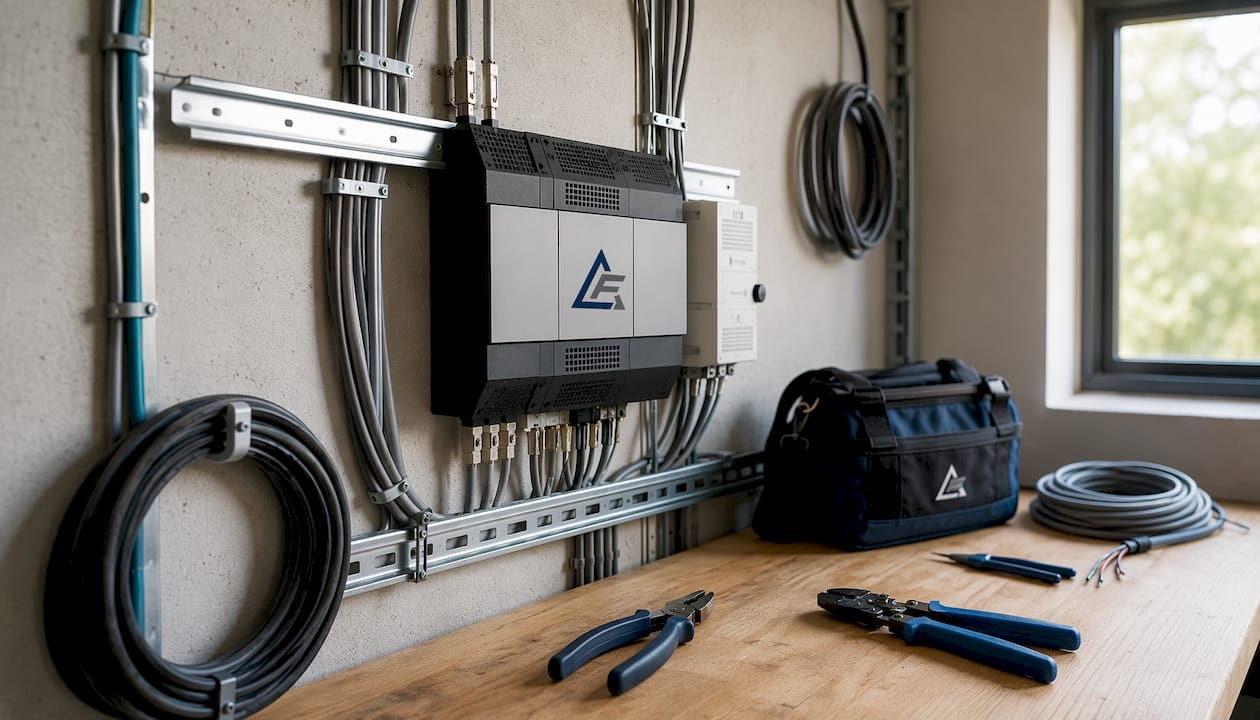
The core commercial case for digital building management rests on measurable energy reduction and lower operational costs. Trend BEMS delivers both through a combination of automated control and analytics.

Energy control and scheduling is where most estates see the fastest return. Occupancy-based setpoints adjust heating and cooling automatically as spaces fill and empty, while seasonal compensation profiles prevent plant from running at summer settings in winter. These are not theoretical gains: the BEMS market is projected to grow from USD 44.72 billion in 2025 to USD 102.64 billion by 2032, driven largely by regulation, rising energy costs, and demand for real-time monitoring across commercial estates.
Analytics and fault detection are where Trend’s supervisory layer earns its keep. IQVISION surfaces anomalies, such as a boiler running outside its scheduled window or a sensor reporting implausible values, before they become costly failures. Operators can qualify faults remotely and often resolve them without dispatching an engineer, reducing both reactive spend and site visit frequency.
Sustainability and ESG reporting is increasingly non-negotiable for UK commercial and public sector estates. Trend’s energy metering and dashboard exports give facilities teams the carbon and consumption data they need for internal reporting, CRC obligations, and sustainability commitments. The data is exportable and can feed third-party ESG platforms.
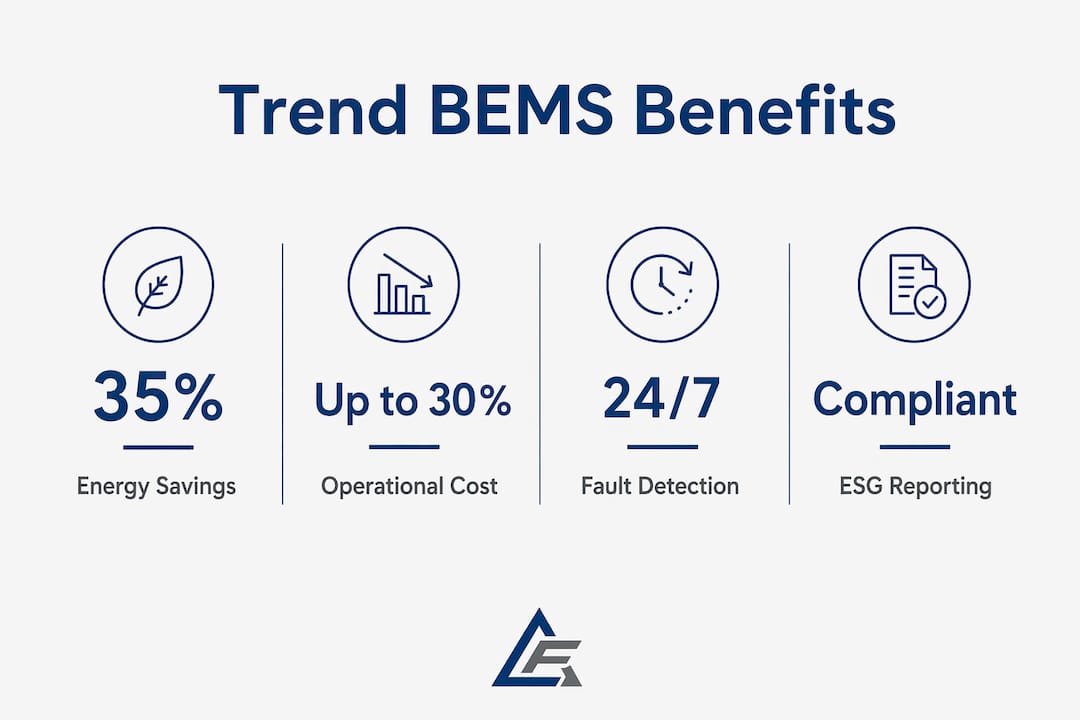
Operational benefits beyond energy include improved asset lifecycle management. When controllers log runtime hours and fault histories, maintenance teams can move from reactive to predictive maintenance models, extending plant life and reducing unplanned downtime.
How does trend integrate with existing plant and third-party systems?
Integration is where many BEMS projects stall. Trend’s architecture is designed to reduce that risk, but facilities teams still need to verify readiness before committing to a specification.
Backwards and cross-compatibility is a formal Trend Controls policy. The modular design allows new IQ series controllers to be introduced alongside legacy Trend 963 hardware without complex gateways, meaning you can upgrade controllers one zone at a time rather than all at once. This is the single most important commercial advantage for estates with mixed-generation Trend equipment.
Common protocols and network media include Ethernet and TCP/IP for IQ4, IQ5, and IQVISION products. Where older proprietary network segments exist, TONN provides the integration layer. For third-party systems such as fire panels, access control, or lighting, gateways are typically required; the need for one should be confirmed during the site survey.
Integration readiness checklist for your IT and estates teams:
- Confirm network availability at each controller location (Ethernet drops or wireless coverage).
- Define VLAN segmentation and firewall rules for BMS traffic.
- Establish a cybersecurity policy covering remote access methods and authorised connection points.
- Tag all meters and sub-meters with a consistent naming convention before commissioning.
- Identify third-party systems requiring handshakes (fire, lighting, access control) and confirm gateway requirements.
- Agree remote access strategy with IT: VPN, cloud gateway, or direct connection.
For IT teams specifically, Trend’s Ethernet/TCP-IP architecture means BMS traffic can be managed on a dedicated VLAN, limiting exposure to the corporate network. Remote access should be via documented, authorised methods only. Cybersecurity is a named solution area within Trend Controls’ own product portfolio, reflecting the reality that connected building systems are now a recognised attack surface.
Pro Tip: Run your integration pilot across no more than four sites. Use that phase to expose network gaps, test gateway configurations, and lock a supervisor template before committing to an estate-wide rollout. Changes to the template after full deployment are expensive.
What does a typical trend upgrade or migration look like?
Most UK estates do not need a full system replacement. Phased migration is the norm, and Trend’s backwards compatibility makes it practical.
Three migration approaches:
- Controller-first: Replace legacy Trend 963 field controllers with IQ series units while retaining the existing 963 Supervisor. This improves plant-level performance and sets up a future supervisor upgrade.
- Supervisor-first: Add IQVISION above the existing controller estate to gain modern visualisation and analytics immediately, then replace controllers in subsequent phases.
- Parallel pilot: Deploy a complete IQ5 and IQVISION stack on one building or zone, run it alongside the legacy system, and use the pilot to develop the supervisor template before wider rollout.
Migration checklist:
- Complete a full asset survey: controller count, firmware versions, network topology, and licence status.
- Review software licences and confirm IQVISION compatibility with existing controller firmware.
- Assess network readiness: Ethernet availability, VLAN policy, and remote access provision.
- Develop the supervisor template on the pilot site before touching the wider estate.
- Plan staged commissioning with defined acceptance tests at each phase.
- Schedule commissioning works out of hours to avoid operational disruption, a practice validated by practical upgrade projects where IQ5 controllers were aligned to legacy phases with all commissioning delivered outside business hours.
Typical timeline for a mid-size estate (say, 10–20 buildings):
- Months 1–2: Asset survey, network readiness assessment, pilot site selection.
- Months 3–4: Pilot deployment, template development, acceptance testing.
- Months 5–10: Phased rollout across remaining buildings.
- Months 11–12: Optimisation, setpoint fine-tuning, and first energy performance review.
Cost drivers to budget for:
- Number of controllers requiring replacement or firmware upgrade.
- Network infrastructure upgrades (Ethernet cabling, switches, VLAN configuration).
- IQVISION software licences and annual support agreements.
- Contractor hours for commissioning, including out-of-hours premiums.
- IT security review and sign-off, particularly for remote access configuration.
Consider HVAC plant condition alongside the controls upgrade. If plant is approaching end of life, coordinating controls and HVAC replacement in a single mobilisation reduces disruption and often lowers overall project cost.
What does good trend BMS maintenance look like?
A Trend BEMS is only as reliable as the maintenance regime behind it. The system generates value continuously, but only if firmware is current, backups are verified, and faults are acted on promptly.
Service model options for UK estates:
- Reactive cover only: Engineer attendance on fault; lowest upfront cost but highest risk of extended downtime and energy drift.
- Planned preventative maintenance (PPM): Scheduled visits covering firmware checks, backup verification, controller health reports, and setpoint review. This is the minimum recommended model for any estate where energy performance is being measured.
- Remote monitoring and managed services: A supplier monitors the BEMS dashboard continuously, qualifies alarms remotely, and dispatches engineers only when physical intervention is required. This model, validated by the Guy’s and St Thomas’ NHS experience, reduces unnecessary site visits and accelerates fault resolution.
- Full FM contract: Combines PPM, reactive cover, remote monitoring, and compliance management under a single agreement with defined SLAs.
What to expect from a Trend-competent supplier:
- Certified engineers with documented Trend Controls training and authorised access methods.
- Scheduled firmware and patch routines with written records.
- Regular backup and restore verification, not just backup creation.
- Controller health reports and trending data reviewed at each PPM visit.
- Transparent SLAs covering response times for critical, urgent, and routine faults.
What your in-house team should own:
- Day-to-day alarm acknowledgement and first-line investigation via IQVISION.
- Occupancy schedule updates and minor setpoint adjustments within defined parameters.
- Escalation protocols: knowing when to call the supplier rather than attempting firmware changes internally.
Firmware upgrades, major plant changes, and any modification to the supervisor template should remain with a qualified supplier. The risk of an untested firmware change taking a controller offline during occupied hours is not worth the saving on a call-out fee.
How do you choose the right trend BEMS partner in the UK?
Supplier competency varies considerably. A structured evaluation process protects you from appointing a contractor who can install hardware but cannot commission, optimise, or support it.
Core questions to ask every bidder:
- How many Trend BEMS installations have you completed in the past three years, and can you provide references?
- How many of your engineers hold current Trend Controls certification?
- What is your authorised remote access method for Trend systems?
- How do you handle cybersecurity: VLAN configuration, access credentials, and patch management?
- Can you provide examples of energy savings achieved on comparable estates?
- What does your post-installation support model look like, and what are your documented SLA response times?
Red flags to watch for:
- No documented rollback or commissioning plan for the migration phase.
- Vague or verbal SLAs with no written response-time commitments.
- Engineers without verifiable Trend Controls training.
- No examples of supervisor template handover to the client at project close.
- Inability to demonstrate cybersecurity practices for remote access.
Procurement tips:
- Require a pilot phase as a contractual milestone before full estate rollout is authorised.
- Insist on supervisor template handover: you should own the configuration, not be dependent on the supplier for every change.
- Include defined acceptance tests at each commissioning phase, with sign-off criteria agreed in advance.
- Specify KPI reporting frequency in the contract: monthly energy performance reports are a reasonable minimum.
Recommended scoring rubric for tender evaluation:
For broader context on how UK suppliers are evaluated across the BMS marketplace, the criteria above align with how procurement teams typically differentiate between generalist contractors and genuine Trend specialists.
What results can you expect? the NHS case study
The Guy’s and St Thomas’ NHS Foundation Trust case study is the most cited UK evidence base for Trend BEMS performance, and the figures are worth examining carefully.
After centralising multiple sites under a Trend supervisor, the Trust reported first-year savings of approximately 350,000 kWh of gas, a 16% overall improvement in energy consumption, and a 9% reduction in carbon emissions. These are first-year figures from a healthcare estate, which typically has high baseline consumption and complex occupancy patterns, making them a credible benchmark for other large UK estates.
The operational changes were as significant as the energy numbers. Centralised monitoring via the Trend supervisor allowed the facilities team to qualify faults before dispatching engineers, reducing unnecessary site visits and accelerating resolution times. The supervisor brought multi-site information to one location, which is the operational model most UK estates are trying to reach.
What you can reasonably expect in your first 12 months after full commissioning:
- Measurable reduction in gas and electricity consumption as occupancy schedules and setpoints are optimised.
- Fewer reactive call-outs as remote diagnostics identify and resolve faults before they escalate.
- A baseline energy dataset that supports your ESG reporting and internal business cases.
- Improved asset visibility, with controller health data informing your PPM schedule.
Healthcare estates have particular compliance and uptime requirements, but the principles apply equally to commercial offices, education campuses, and retail portfolios. For NHS and healthcare-specific context, the healthcare building services considerations around uptime and compliance are directly relevant to how a Trend BEMS is specified and maintained.
Key takeaways
A Trend BEMS delivers measurable energy savings, operational efficiency, and a clear upgrade path from legacy Trend 963 systems to the IQ series, provided the site survey, network readiness, and supplier competency are addressed first.
| Point | Details |
|---|---|
| Commission a site survey first | Asset baseline, network readiness, and firmware review must precede any specification or procurement. |
| Backwards compatibility reduces risk | Trend’s modular design allows phased IQ series migration without replacing all legacy Trend 963 hardware at once. |
| NHS case study sets the benchmark | Guy’s and St Thomas’ NHS Trust reported first-year savings of approximately 350,000 kWh of gas, a 16% overall improvement in energy consumption, and a 9% reduction in carbon emissions. |
| Supplier competency is the critical variable | Require Trend Controls certification, documented SLAs, and a supervisor template handover as contract conditions. |
| Delta First covers your region | Delta First provides Trend BEMS surveys, PPM, and upgrades across Essex, Suffolk, Norfolk, and Greater London. |
Why the upgrade conversation matters more than the technology
There is a tendency in the facilities management sector to treat BEMS projects as technology decisions. They are not. They are operational decisions that happen to involve technology. The question is never really “which controller?” It is “what does this estate need to perform reliably, and who is accountable for making that happen?”
Trend Controls has built a strong case for itself through backwards compatibility and a mature product range. But the estates that extract the most value from a Trend BEMS are not necessarily the ones with the newest hardware. They are the ones with a clear supervisor template, a disciplined PPM schedule, and a supplier who treats the system as a long-term asset rather than a one-time installation.
The Guy’s and St Thomas’ figures are compelling, but they did not happen automatically. They happened because the operational model changed: faults were qualified remotely, engineers were dispatched purposefully, and energy data was reviewed regularly. That discipline is replicable on any estate, regardless of size or sector. The technology enables it; the service model delivers it.
Request a trend BMS survey from Delta First
Delta First provides the practical alternative to managing a Trend BEMS upgrade in isolation. Rather than coordinating separate contractors for the asset survey, network assessment, commissioning, and ongoing PPM, you get a single accountable partner covering all of it across Essex, Suffolk, Norfolk, and Greater London.
A Delta First Trend BEMS survey covers your site asset register, a high-level migration outline, network readiness assessment, and indicative costs and timelines, giving you everything you need to build an internal business case or go to tender with confidence. Our engineers are experienced across electrical, mechanical, HVAC, and building fabric services, so the survey looks at the whole picture, not just the controls layer.
Request a survey or planned maintenance quote from Delta First today, and we will confirm availability and scope within one working day.
Useful sources and further reading
The following sources support the claims in this article and provide primary reference material for business cases, technical specifications, and procurement planning.
- Trend Controls | Honeywell Building Technologies: The primary vendor page for product families (IQ5, IQeco, IQX12, IQVISION), solution areas, and technical documentation. Start here for datasheets and current product specifications.
- Backwards and cross-compatibility | Trend Controls: Vendor statement on modular design and phased upgrade policy. Cite this directly in business cases where legacy Trend 963 migration is proposed.
- Guy’s and St Thomas’ NHS Foundation Trust case study: Primary source for the 350,000 kWh, 16% energy improvement, and 9% carbon reduction figures. Use for internal business case evidence.
- BEMS market analysis | Industry Today: Market size and growth projections (USD 44.72 billion to USD 102.64 billion by 2032). Useful for contextualising investment decisions and regulatory drivers.
- Smart building upgrades | SSE Energy Solutions: Practical case study notes on IQ5 controller alignment, out-of-hours commissioning, and structured post-upgrade support. Reference for migration planning and SLA discussions.
Recommended
- What are smart buildings? A UK guide for facilities managers
- Predictive maintenance for UK commercial buildings: 2026 guide
Need support with mechanical or HVAC maintenance? Delta First delivers planned and reactive mechanical maintenance across Essex, Suffolk and London, using certified specialist partners for gas and refrigerant work, with 24/7 emergency cover. Call 01206 237422 or request a quote.
Talk to Delta First
Delta First Building Services is a Colchester-based M&E contractor working across Essex, Suffolk and London, with commercial work in Norfolk. Our directly employed electrical team is supported by vetted specialist subcontractors where extra certification is needed, and we offer genuine 24/7 emergency cover. Get in touch to arrange a survey or quote.
[…] Trend building management system: a UK facilities guide […]