

What water compliance services actually cover
Water compliance services are the structured legal and technical processes that assess, control, monitor, and document water system safety in commercial buildings. Under the Health and Safety at Work etc. Act 1974, alongside COSHH Regulations and HSE Approved Code of Practice L8, every dutyholder has a legal obligation to control Legionella risk. That means more than a one-off check.
A complete programme covers:
- Legionella risk assessment — a living document reviewed after building modifications or occupancy changes
- Written water safety control scheme — describing system layout, responsible persons, control methods, and monitoring frequency
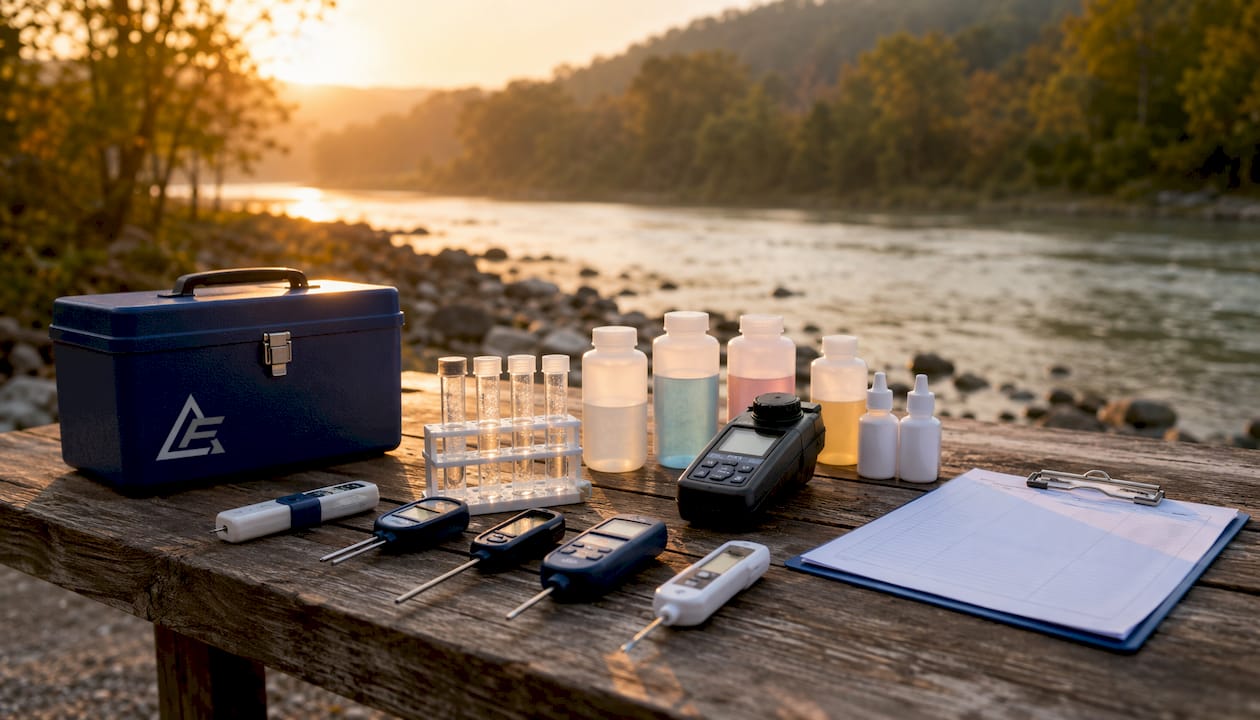
- Routine temperature monitoring — cold water below 20°C, hot water stored at 60°C and reaching 50°C at outlets within one minute
- Sampling and laboratory analysis by UKAS-accredited labs
- Compliance logbook — a traceable record of every monitoring visit, temperature log, and test result
Failure to maintain any of these elements can constitute non-compliance, even when the water itself meets drinking water standards.
Core management practices that keep your building compliant
The most common compliance failures are management issues, not technical ones: inadequate staff training, poor communication between dutyholders and responsible persons, and incomplete logbooks. Getting the management structure right matters as much as the physical monitoring.
The responsible person must hold sufficient authority, competence, and technical knowledge to oversee water safety controls. Appointing an external contractor does not remove that accountability. Dutyholders retain ultimate legal responsibility and must actively verify a contractor’s competence and performance, not simply delegate and move on.
Risk assessments are dynamic. They must be revised after building upgrades, changes in occupancy, or alterations to the water system. A static assessment increases non-compliance risk considerably.
Scheduling matters. Temperature checks and flushing of infrequently used outlets typically run monthly or quarterly; cold water storage tanks are inspected annually. Your risk assessment sets the specific frequencies for your site.
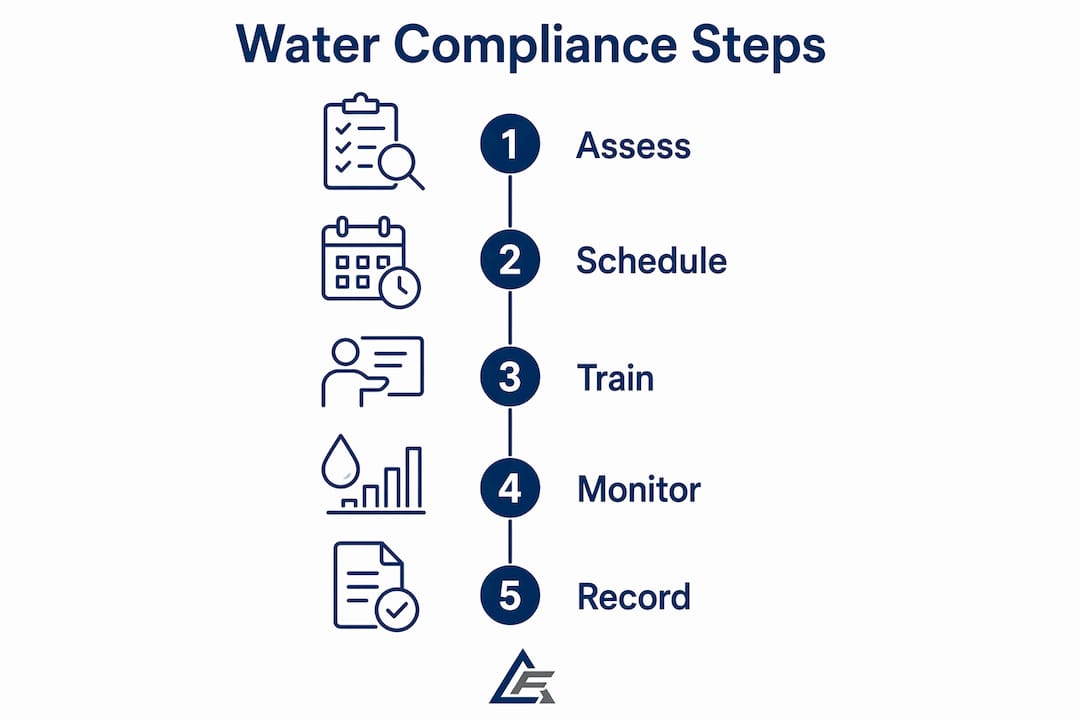
Training and staff awareness are non-negotiable. Staff involved in water monitoring need documented competency, and broader awareness programmes help catch issues early. Poor communication between site teams and compliance managers is consistently cited in RIDDOR-reportable incidents linked to Legionella.
Digital logbooks and monitoring technology are now widely used to produce auditable, time-stamped records. During a regulatory audit, absence of a properly maintained logbook can alone constitute failure. Our guide to full compliance management covers how digital records meet audit standards in practice.
Pro Tip: When selecting a water compliance partner, prioritise technical proficiency with HSG274 and ACOP L8 guidance, and confirm they can provide transparent, auditable records — digitally or physically. Credentials and record quality matter more than price.
For a broader view of how water compliance sits within your building’s mechanical services obligations, the mechanical services compliance guide is a useful reference.
How Delta First supports your water compliance programme
Delta First provides qualified engineers experienced in UK water hygiene compliance, working to HSE L8, ACOP L8, and HSG274 requirements across Essex, Suffolk, Norfolk, and Greater London. Working with vetted specialist partners where needed, we can provide Legionella risk assessments, written control schemes, routine temperature monitoring, UKAS-accredited sampling, tank cleaning, disinfection, and full digital compliance recordkeeping.
For healthcare and NHS sites, education premises, commercial offices, retail, and industrial facilities, we act as a single accountable partner. You get documented regulatory compliance, professional support, and the confidence that your logbook will stand up to scrutiny.
Contact Delta First today to request a bespoke water hygiene survey or compliance quotation.
Key takeaways
Effective water compliance requires a combination of documented risk assessment, temperature control, UKAS-accredited testing, and robust recordkeeping — management failures cause more incidents than technical faults.
| Point | Details |
|---|---|
| Risk assessments must be dynamic | Review after building changes or occupancy shifts; static assessments increase non-compliance risk. |
| Temperature control is the primary strategy | Cold water below 20°C; hot water stored at 60°C and reaching 50°C at outlets within one minute. |
| Logbooks are legally critical | A missing or incomplete logbook can alone constitute failure during a regulatory audit. |
| Management failures dominate incidents | Inadequate training and poor communication between dutyholders and responsible persons are the leading causes. |
| Delta First covers the full programme | Risk assessments, monitoring, sampling, tank cleaning, and digital records across Essex, Suffolk, Norfolk, and Greater London. |
Recommended
- Integrated facilities management: a practical guide for UK businesses – Commercial Building Services Insights
- Best fire system installers in the UK: 2026 guide
Need support with mechanical or HVAC maintenance? Delta First delivers planned and reactive mechanical maintenance across Essex, Suffolk and London, using certified specialist partners for gas and refrigerant work, with 24/7 emergency cover. Call 01206 237422 or request a quote.
Talk to Delta First
Delta First Building Services is a Colchester-based M&E contractor working across Essex, Suffolk and London, with commercial work in Norfolk. Our directly employed electrical team is supported by vetted specialist subcontractors where extra certification is needed, and we offer genuine 24/7 emergency cover. Get in touch to arrange a survey or quote.
[…] water compliance services page covers how this integrates with a wider mechanical maintenance […]