

DSEAR applies wherever dangerous substances such as flammable gases, solvents, corrosive vapours or combustible dusts are present, which covers far more UK workplaces than most facility managers assume. If your workplace has multiple employees, you should record the significant findings of your risk assessment and maintain an Explosion Protection Document. The immediate next step is straightforward: scope and commission a site-specific DSEAR risk assessment, or revisit your existing EPD if anything on site has changed since it was written.
TL;DR:
- A comprehensive DSEAR risk assessment must clearly link release sources, ignition sources, and safety controls to pass inspection and accurately classify hazardous zones.
- Zone classifications depend on airflow, containment, and dispersal, requiring verified, site-specific data and regular re-evaluation whenever site changes occur.
- Controls should follow a strict hierarchy from substitution and reduction to mitigation, with zone-rated equipment registered and maintained through planned preventative maintenance.
- The Explosion Protection Document must be updated with every process change, and a well-maintained record of training and drills is essential for compliance.
- Outsourcing to qualified multidisciplinary contractors ensures that assessments, installations, and maintenance are aligned, preventing common enforcement pitfalls for facility managers.
Step-by-step DSEAR risk assessment for facilities
A DSEAR risk assessment only holds up under inspection when it follows a logical chain from substance to consequence. HSE inspectors specifically look for the documented link between release sources, ignition sources and the basis of safety — assessments that skip this reasoning are the ones that fail enforcement checks.
Work through the process in this order:
- Scope the assessment. Define the site or process boundary precisely, and include non-routine tasks such as maintenance, cleaning and tanker deliveries, not just normal production.
- Compile a substance inventory. Pull safety data sheets for every flammable, explosive or corrosive-to-metal substance, then quantify stored amounts and daily throughput.
- Identify release sources. Map where vapours, gases or dusts could escape, and judge how likely and how persistent each release would be.
- Identify ignition sources. Electrostatic discharge, hot work, and unprotected electrical equipment all count, and each one needs linking back to a specific release source.
- Record the basis of safety. For every credible scenario, document why the combination of controls prevents ignition, and carry that reasoning through into your hazardous area classification and EPD.
Pro Tip: Build your assessment as a spreadsheet with one row per release source, columns for ignition sources and controls, and a final column for basis of safety. It forces the logical link inspectors are trained to check.
The DSEAR risk assessment process is fundamentally a sequence of decisions, not a form to fill in from memory. Treat it that way and the outputs for zoning and your EPD follow naturally.
What are DSEAR zones and how are they verified?
Hazardous area classification, or HAC, sorts spaces by how likely an explosive atmosphere is to occur and for how long. Regulation 7 of DSEAR sets out the classification duty and the equipment selection rules that follow from it.
- Zone 0 covers places where an explosive gas or vapour atmosphere is present continuously or for long periods.
- Zone 1 applies where it’s likely to occur occasionally during normal operation.
- Zone 2 is for atmospheres that are unlikely, and if they do occur, only briefly.
- Zones 20, 21 and 22 mirror the same three bands for combustible dusts rather than gases or vapours.
Ventilation rate, how the substance is contained, and how quickly a release disperses all determine how far a zone extends beyond its source. This should produce zone data sheets, marked-up general arrangement drawings, signage, and an equipment list matched to each zone’s category.
Crucially, HAC is an output of the risk assessment, not a substitute for it — zoning performed in isolation, without the underlying release and ignition analysis behind it, typically fails a “suitable and sufficient” test. A competent person should verify zoning at handover and again whenever the process, layout or substance quantities change.
Controls, mitigation and the DSEAR hierarchy of measures
DSEAR sets out a strict order of preference for controls, and inspectors expect to see it followed, not cherry-picked. Work down the hierarchy before settling on a solution:
- Eliminate or substitute the dangerous substance where a safer alternative exists.
- Reduce quantities held or handled on site to the minimum needed for operations.
- Contain the substance through sealed transfer systems, closed-loop processing or funding.
- Control the atmosphere with local exhaust ventilation or general extraction sized for the release rate.
- Remove ignition sources, using intrinsically safe or ATEX-rated equipment where the zone demands it.
- Mitigate the consequences with explosion relief panels, suppression systems, segregation distances and appropriate PPE as a last line of defence.
Equipment selection has to match the zone it sits in, not a generic site-wide standard, and every piece of zone-rated equipment belongs on an approved equipment register that’s kept current.
Pro Tip: When budgets are tight, prioritise fixing gaps in extraction and ventilation before adding suppression systems. Removing the atmosphere is usually cheaper and more reliable than containing an explosion after it starts.
Ventilation plant, gas detection systems and zone-rated electrical equipment all depend on planned maintenance to keep performing as designed, which is where a coordinated PPM programme aligned to SFG20 standards earns its keep.
Records, the explosion protection document and management of change
If you employ five or more people, Regulation 5(4) obliges you to record the significant findings of your DSEAR risk assessment. The accepted format for this is the Explosion Protection Document, or EPD.
A complete EPD should contain:
- The substance inventory and quantities, cross-referenced to safety data sheets.
- Release and ignition source analysis, with the basis of safety for each scenario.
- Zone classification data, verification records and equipment lists.
- Emergency arrangements, training logs and drill records.
Treat the EPD as a living document rather than a one-off deliverable, and update it whenever process parameters, substance quantities or layouts change. New substances, equipment swaps, incidents and quantity increases are all management-of-change triggers that demand an immediate review, not one deferred to the next annual cycle.
Emergency planning, drills and training under DSEAR
Regulation 8 requires emergency arrangements that are proportionate to the risk on site, not a blanket procedure copied from a template. That means functioning warning systems, drills scheduled realistically against your risk profile, and clear first-aid and repair arrangements for when something goes wrong.
Training needs to cover the specific hazards identified in your assessment, not generic fire safety points:
- Substance-specific hazards and how they were assessed.
- Safe working procedures for routine and non-routine tasks.
- Contractor briefing before any hot work or maintenance near a classified zone.
- Coordination with the local fire and rescue service, including sharing EPD information where it helps their own planning.
Keep dated records of every drill and training session. Inspectors treat a training log as evidence the arrangements are lived, not filed away.
Common DSEAR inspection pitfalls and a pre-inspection checklist
Most enforcement problems trace back to a handful of recurring weaknesses. Generic templates that never link release sources to ignition sources and a basis of safety are the biggest offender, closely followed by an EPD that hasn’t been touched since it was first written, unverified hazardous area classification, and missing training or drill records.
Run through this before an inspector arrives:
- A written scope statement covering the site and processes assessed.
- A current substance inventory with quantities and safety data sheets.
- Zone drawings and data sheets, verified by a competent person.
- An equipment list matched to zone requirements.
- An up-to-date EPD reflecting the current site.
- Training records and recent drill paperwork.
Pro Tip: If your EPD predates your last equipment change, commission a targeted addendum rather than a full rewrite. It’s faster, cheaper, and closes the specific gap an inspector will flag first.
Many of these gaps trace back to electrical equipment that was never verified against its zone rating, which is where certified EICR testing closes the loop between paperwork and physical reality.
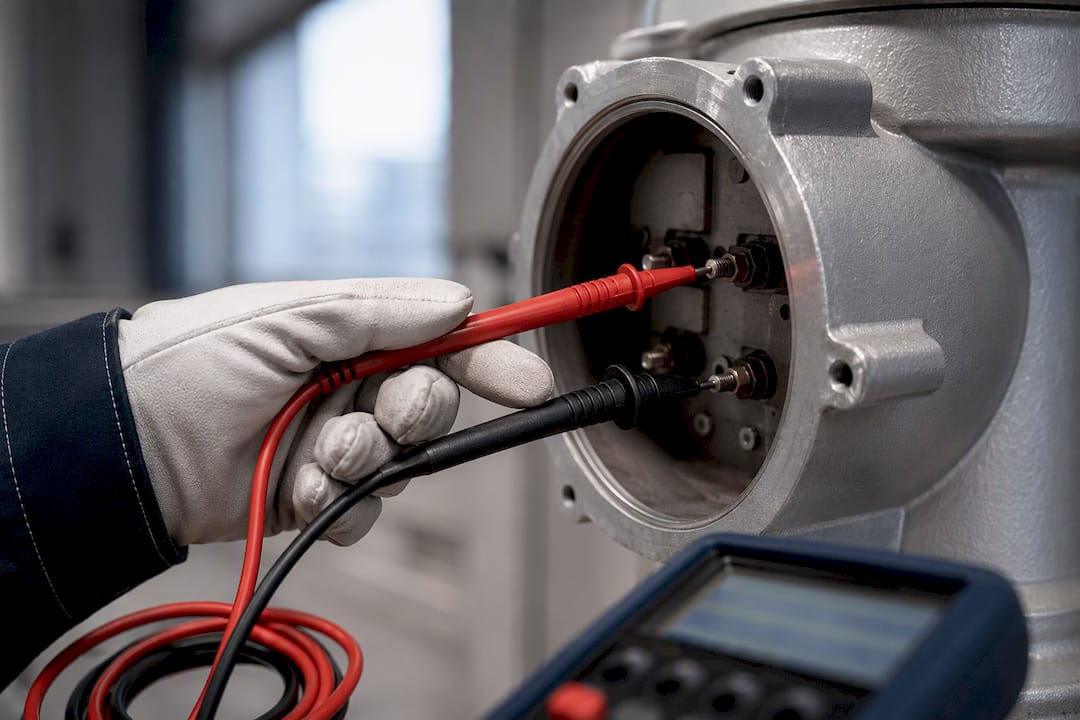
Delta First perspective: multidisciplinary support for DSEAR compliance
A single accountable contractor closes the gap between what an EPD says and what’s actually installed on site. Delta First’s electrical maintenance teams, HVAC engineers and fabric specialists work from the same compliance picture, so extraction upgrades, zone-rated electrical work and ventilation fixes get delivered without three separate contractors interpreting the risk assessment differently. If your EPD has fallen behind your operations, request a DSEAR-focused survey or planned maintenance review.
— Ashley
Request a DSEAR review or planned maintenance survey
Facility managers rarely have the internal capacity to run a DSEAR assessment, commission the remedial electrical and ventilation work it identifies, and then keep it all maintained. Delta First brings all four disciplines, electrical, mechanical, HVAC and fabric, under one accountable team, so a DSEAR review doesn’t stall waiting for a second contractor to pick up the extraction fix or the zone-rated wiring.

A Delta First DSEAR review typically covers scoping the site, building the hazards inventory, supporting your EPD drafting with technical input, and prioritising the remedial works your assessment flags, backed by a clear quotation. This service is delivered across Essex, Suffolk, Norfolk and Greater London, with regionally based engineers who can turn an identified gap into a completed fix quickly rather than leaving it on a to-do list.
If your last risk assessment predates recent process changes, or your EPD needs an independent check before an inspection, request a quotation or planned maintenance survey from Delta First and get a clear picture of what needs fixing first.
FAQ
What is DSEAR compliance?
DSEAR compliance means assessing and controlling the risks from dangerous substances that could cause fire or explosion, following the Dangerous Substances and Explosive Atmospheres Regulations 2002 and recording your findings where required.
Who needs a DSEAR risk assessment?
Any workplace where flammable gases, vapours, dusts or gases under pressure are present needs one, including sites handling substances like wood dust or flour that staff don’t always recognise as covered.
When must DSEAR findings be recorded in writing?
If your workplace has enough employees, Regulation 5(4) requires you to record the significant findings, typically consolidated into an Explosion Protection Document.
How often should a DSEAR assessment be reviewed?
Review it whenever a management-of-change trigger occurs, such as a new substance, a quantity increase, equipment swaps or an incident, rather than sticking to a fixed annual date regardless of what’s changed on site.
Can Delta First help with DSEAR compliance work?
Yes. Delta First supports DSEAR compliance through site surveys, planned preventive maintenance for extraction and ventilation, certified electrical works and rapid reactive support across Essex, Suffolk, Norfolk and Greater London.
Recommended
- Act now: written scheme of examination for UK facilities managers
- 7 key checks: CDM 2015 client duties for UK facilities managers
- Summer HVAC maintenance: a guide for facilities managers
- SFG20 maintenance: your guide to UK compliance standards
Need a reliable maintenance and compliance partner? Delta First provides planned preventive maintenance, statutory compliance support and reactive repairs from one accountable contractor across Essex, Suffolk and London, with 24/7 emergency cover. Call 01206 237422 or request a quote.
Talk to Delta First
Delta First Building Services is a Colchester-based M&E contractor working across Essex, Suffolk and London, with commercial work in Norfolk. Our directly employed electrical team is supported by vetted specialist subcontractors where extra certification is needed, and we offer genuine 24/7 emergency cover. Get in touch to arrange a survey or quote.