

A CP42 is the UK commercial kitchen gas safety certificate, valid for 12 months and required wherever gas appliances operate with mechanical extraction or an interlock system. Restaurants, hotel kitchens, care home catering units and school canteens all fall under this requirement. Only a Gas Safe registered engineer holding commercial catering qualifications can carry out the inspection and issue the certificate.
TL;DR:
- A CP42 certificate is required annually for kitchens with gas appliances connected to mechanical extraction or interlock systems in the UK.
- The inspection process includes appliance testing, pipework tightness checks, ventilation measurement, and an interlock functional test, with documentation of all results.
- Costs depend on appliance count and complexity, with larger kitchens and additional systems like interlocks increasing the price, and quotes should detail all tests performed.
- Holding a CP42 does not exempt operators from ongoing maintenance responsibilities under Regulation 35, which requires continuous safe condition of gas systems.
- Coordinate CP42 inspections with regular mechanical and ventilation servicing to avoid disruptions and ensure compliance through a unified planned maintenance schedule.
What is a CP42 certificate?
A CP42 certificate is the accepted industry record confirming that a commercial kitchen’s gas appliances, extraction system and interlock have been inspected and found safe on a specific date. It exists to demonstrate compliance with the Gas Safety (Installation and Use) Regulations 1998, and it documents every appliance tested, the pipework checked, and the ventilation performance measured on the day.
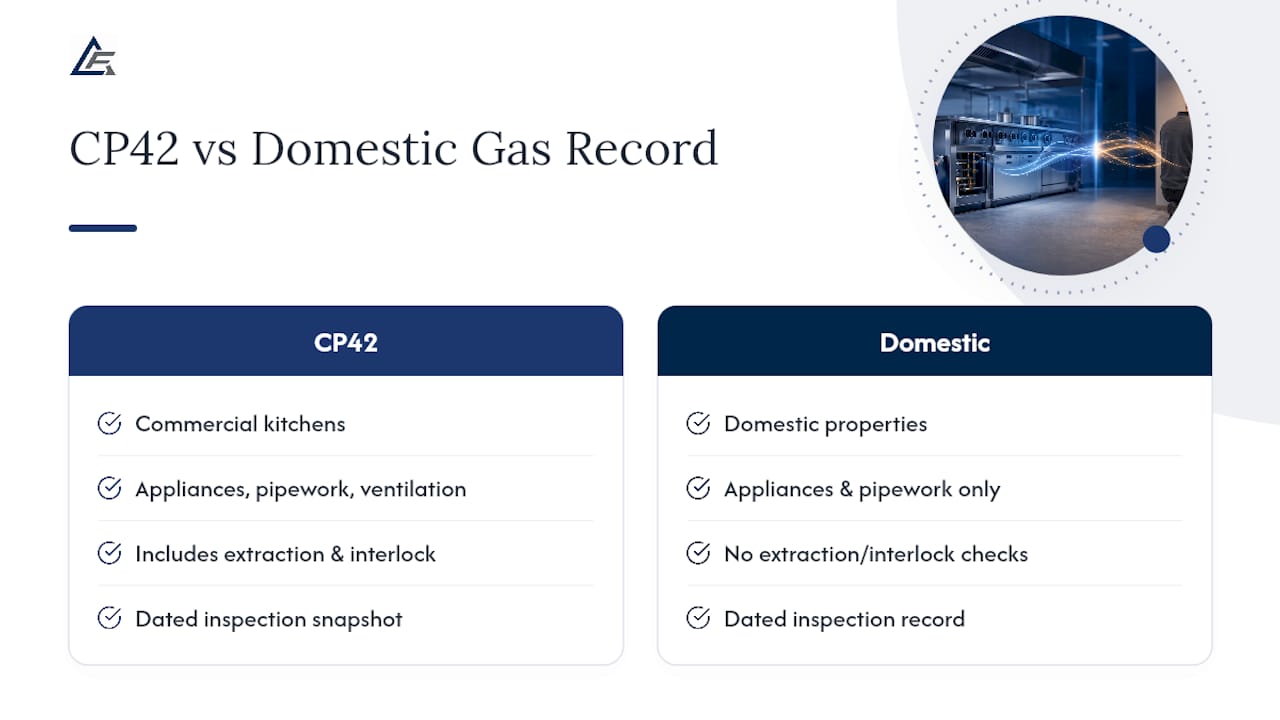
That last point matters more than most operators realise. A CP42 is a dated snapshot, not an ongoing guarantee. It tells you the kitchen was safe when the engineer left, not that it will stay that way for the next 12 months without proper upkeep. This is what separates it from a standard domestic gas safety record, which never accounts for the extraction and interlock systems found in a commercial catering environment.
Who actually needs a CP42?
Any premises running gas appliances alongside mechanical extraction or a gas interlock needs a valid CP42. That covers a broad slice of the hospitality and public sector estate:
- Restaurants and pub kitchens with commercial ranges or fryers
- Hotel kitchens, including satellite prep areas with their own extraction
- Care home and hospital catering units
- School and university canteens
- Mobile catering units and food trucks fitted with gas appliances
The defining test isn’t the type of premises, it’s whether gas appliances work in conjunction with mechanical extraction or an interlock. A low-use community hall with a single domestic-style cooker may not need one. If you’re unsure where your site sits, get technical advice before assuming either way.
CP42 vs CP12: what’s the difference?
CP12 and CP42 cover different territory entirely, and confusing them is one of the most common compliance mistakes facilities teams make.
- CP12 applies to domestic and rented residential gas appliances, typically issued by landlords for tenant safety.
- CP42 applies specifically to commercial catering premises, covering appliances, extraction and interlock systems together.
A landlord’s CP12 on a building’s residential flat above a restaurant does nothing to satisfy the kitchen’s own compliance duty. If your site also has boilers or heating plant, those may need separate records covered under commercial gas safety documentation.
What does a CP42 inspection actually cover?
A proper CP42 inspection is far more thorough than a quick look at the cooker. The engineer works through a defined sequence of checks, and each one should appear in the final report:
- Appliance testing — combustion analysis, gas pressure checks, and leak detection on every gas appliance in the kitchen.
- Pipework tightness testing — verifying the entire gas run holds pressure with no leaks along fittings or joints.
- Ventilation and extraction airflow measurement — confirming the extraction system removes combustion by-products and supplies adequate replacement air.
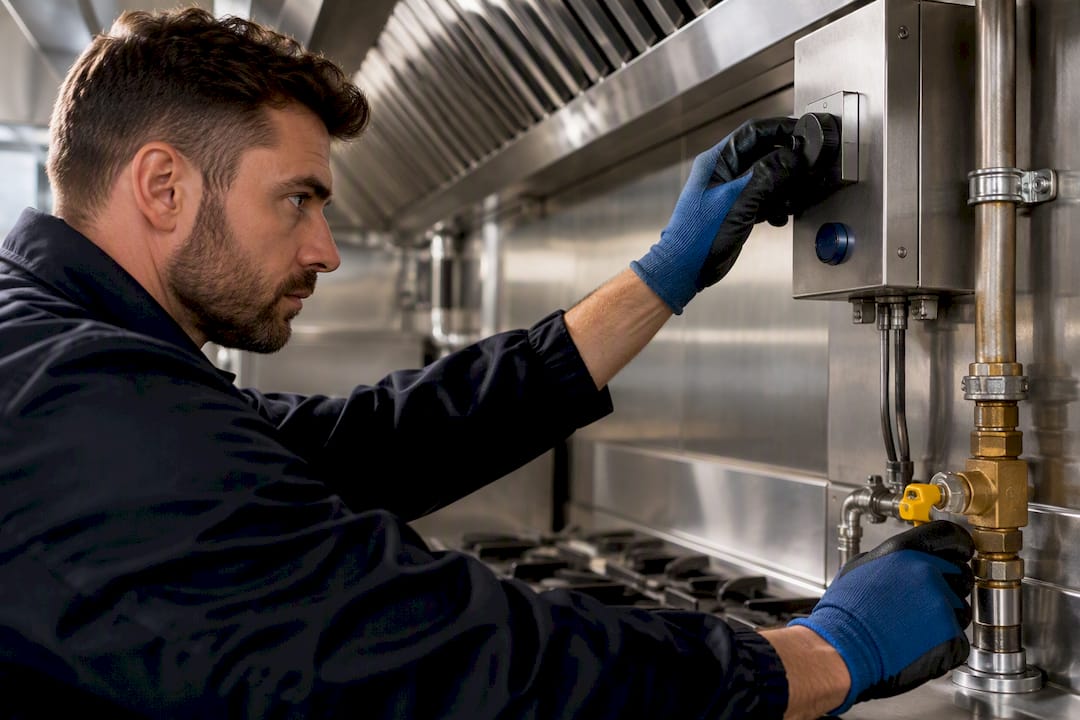
- Gas interlock functional test — checking the interlock correctly shuts off gas supply when extraction fails or isn’t running.
- Documentation — a written report listing every test performed, results, and any remedial action required.
If the engineer uncovers a dangerous condition during any of these checks, they must act immediately under the Gas Industry Unsafe Situations Procedure, which can mean isolating an appliance on the spot.
Pro Tip: Ask your engineer to explicitly document the interlock test result in writing. It’s the single most commonly skipped or vaguely reported item on weaker inspection reports, and it’s often where enforcement action focuses first.
How do you get a CP42 certificate?
Getting a CP42 issued follows a fairly predictable sequence, and preparation on your side speeds the whole process up considerably.
- Pull together an appliance inventory and any previous gas safety records before booking.
- Book a Gas Safe registered engineer who holds commercial catering competence such as COMCAT or CCN1, not just a domestic qualification.
- The inspection itself typically takes two to four hours depending on appliance count, covering the full checklist above.
- If faults appear, expect a remedial works quotation, follow-up repairs, then a reinspection before the certificate is finally issued.
- File the certificate and report somewhere accessible. Insurers and enforcement bodies will ask for it, sometimes with little notice.
Keeping mechanical maintenance records alongside your CP42 paperwork, as covered in this mechanical services compliance guide, makes audits considerably less painful.
How much does a CP42 certificate cost?
Prices vary by site, but the number of appliances is the biggest single driver of cost, followed by site accessibility and whether an interlock system needs testing.
- Small single-kitchen sites with a handful of appliances sit at the lower end of the price range.
- Larger multi-appliance kitchens, or sites with an interlock and complex extraction, cost more due to the extra testing time.
- Out-of-hours inspections and multi-site contracts both add a premium, though multi-site work often earns a better rate per visit overall.
A proper quote should itemise the tests performed, the written report, and any remedial estimate separately. Be wary of unusually low quotes; they often skip pipework tightness testing or ventilation measurement entirely, leaving you with a certificate that won’t hold up under scrutiny.
What are your legal responsibilities under Regulation 35?
Regulation 35 of the Gas Safety (Installation and Use) Regulations 1998 places a direct legal duty on employers and anyone in control of premises to keep gas appliances, flues and pipework in a safe condition.
Employers and those in control of premises must ensure gas appliances, flues and pipework under their control are maintained in a safe condition, not simply inspected once a year and left unattended for the following twelve months.
A CP42 supports that duty; it doesn’t replace it. The certificate proves the kitchen was safe on inspection day, but your ongoing obligation to maintain safe conditions runs continuously. Ignore that distinction and you risk enforcement action, prosecution, or an insurer refusing a claim after an incident on the grounds that the building wasn’t properly maintained between certificates.
How do you choose a provider and verify their qualifications?
Not every engineer with a Gas Safe badge is qualified to work on commercial catering equipment, and this is where facilities managers most often get caught out.
- Check Gas Safe registration and ask to see the physical ID card before work begins.
- Confirm commercial catering competence such as COMCAT or CCN1 is listed on their Gas Safe Register entry, not just domestic gas qualifications.
- Request a sample report and a written scope confirming ventilation and interlock testing are included.
- Watch for red flags: no written scope, reluctance to show ID, or a quote that skips pipework testing entirely.
- Confirm insurance covers commercial catering gas work specifically.
HSE guidance in CAIS 23 is explicit that employers carry responsibility for checking competence themselves, not just trusting a certificate exists.
Pro Tip: Keep a copy of the engineer’s Gas Safe ID card photograph on file alongside your certificate. If a dispute ever arises with an insurer, having proof you checked competence at the time carries real weight.
Delta First’s perspective: fitting CP42 into planned maintenance
Treating CP42 as an annual scramble rather than part of a planned schedule is where most kitchens run into avoidable downtime. Scheduling the inspection alongside routine mechanical and ventilation servicing means faults get caught and fixed in one visit, rather than triggering a separate emergency call-out weeks later.
A single accountable team working across electrical, mechanical, HVAC and building fabric disciplines can help when a kitchen interlock fault turns out to be an electrical issue as much as a gas one, as explained in engineering services that cover technical inspection scopes and qualifications. For busy catering operations in the UK, building CP42 timing into an existing planned preventative maintenance schedule is the simplest way to avoid disruption during service hours.
— Ashley
How Delta First can help with CP42 compliance
Using a single service provider for compliance disciplines in your kitchen can reduce the need to coordinate multiple specialist contractors, offering electrical, mechanical, HVAC and building fabric services through one accountable team rather than a patchwork of specialists you have to coordinate yourself.
Boiler and heating plant servicing, ventilation and extraction maintenance, and interlock-related electrical work all sit within Delta First’s planned preventive maintenance contracts, which means CP42 readiness can be built directly into your existing maintenance schedule rather than treated as a separate annual headache. With regionally deployed engineers and 24/7 emergency cover, remedial work identified during an inspection can often be attended without long delays. If your kitchen’s certificate is due for renewal, or you want compliance folded into a proper maintenance plan, request a quotation or planned maintenance survey from Delta First today.
Need a reliable maintenance and compliance partner? Delta First provides planned preventive maintenance, statutory compliance support and reactive repairs from one accountable contractor across Essex, Suffolk and London, with 24/7 emergency cover. Call 01206 237422 or request a quote.
Sources
- Gas safety for employers – HSE
- The Gas Safety (Installation and Use) Regulations 1998 — Regulation 35
FAQ
What is CP42 in the UK?
CP42 is the commercial catering gas safety certificate confirming that a kitchen’s gas appliances, extraction and interlock systems have been inspected and found safe. It’s typically valid for 12 months, after which a fresh inspection is required.
How much does a CP12 certificate cost?
CP12 pricing depends on the property and number of appliances, and it applies to domestic and rented residential gas safety records rather than commercial kitchens. It shouldn’t be confused with a CP42, which covers commercial catering premises and typically costs more due to the added extraction and interlock testing involved.
What is a CP12 certificate in the UK?
A CP12 is a landlord’s gas safety record confirming domestic gas appliances in a rented property are safe. It’s a separate document from a CP42 and doesn’t cover commercial kitchen extraction or interlock systems at all.
Can I legally fit my own gas cooker in a commercial kitchen?
No. Commercial gas work must be carried out by a Gas Safe registered engineer holding the relevant commercial catering competence, such as COMCAT or CCN1. Fitting or altering commercial gas appliances yourself breaches Regulation 35 and invalidates any subsequent CP42 inspection.
Does a CP42 certificate replace ongoing maintenance duties?
No. A CP42 confirms the kitchen was safe on the day of inspection, but employers carry a continuous legal duty under Regulation 35 to maintain gas appliances safely throughout the year. Pairing CP42 inspections with a planned maintenance schedule, such as those Delta First provides, helps keep that ongoing duty covered between certificates.
Recommended
- UK chiller maintenance: PPM schedule that meets F‑Gas and Legionella
- Cut energy 5–15%: commercial boiler PPM for facilities managers
- Three tiers of UPS maintenance checklist for UK facilities managers
- Five Maintenance KPIs to Make Contractor Data Audit Ready for UK FMs
Talk to Delta First
Delta First Building Services is a Colchester-based M&E contractor working across Essex, Suffolk and London, with commercial work in Norfolk. Our directly employed electrical team is supported by vetted specialist subcontractors where extra certification is needed, and we offer genuine 24/7 emergency cover. Get in touch to arrange a survey or quote.