

Duty-holders in commercial premises must keep gas appliances, pipework and flues in a safe condition and arrange inspections by competent, Gas Safe-registered engineers at intervals of no more than 12 months. That is the core legal obligation under the Gas Safety (Installation and Use) Regulations 1998 (GSIUR). If you cannot produce a current inspection record for every appliance and flue on your premises, your immediate next step is to book that check.
Your immediate compliance checklist:
- Confirm every gas appliance and flue has been inspected within the last 12 months
- Verify the engineer who carried out the work holds a valid Gas Safe registration and the correct commercial qualifications for your plant
- Retain written records of every inspection and make them available for HSE inspection on request
- Log any outstanding remedial works and set a deadline for completion
- Contact Delta First to arrange a compliance survey and establish a planned preventative maintenance (PPM) schedule if you do not already have one in place
Key takeaways
Duty-holders in commercial premises must arrange annual gas safety checks by competent, Gas Safe-registered engineers, retain written records of every inspection, and maintain a PPM programme that keeps systems safe between statutory checks.
| Point | Details |
|---|---|
| Annual checks are a legal duty | GSIUR requires inspections at intervals of no more than 12 months for all commercial gas appliances and flues. |
| Registration alone is not enough | Verify that your engineer holds commercial qualifications for your specific plant type, not just a Gas Safe card. |
| Records must be available on request | Keep written inspection records, including faults and remedial works, and store them in a retrievable digital format. |
| PPM reduces cost and risk | Scheduled maintenance prevents unplanned failures and provides documented evidence of responsible management. |
| Delta First delivers end-to-end compliance | Delta First provides PPM, compliance surveys and emergency cover for commercial premises across Essex, Suffolk, Norfolk and Greater London. |
Table of Contents
- What does commercial gas safety law actually require?
- Who may legally carry out commercial gas work?
- What do commercial gas safety checks cover and how often?
- What records must you keep and what should a certificate show?
- How does planned preventative maintenance reduce risk beyond the annual check?
- Common compliance failures and the red flags to watch for
- What to do if you suspect a gas leak or carbon monoxide incident
- How to vet a gas contractor before you appoint them
- How Delta First supports your commercial gas safety obligations
- Why proactive gas safety governance is worth the investment
- Arrange a commercial gas safety survey with Delta First
- Sources
What does commercial gas safety law actually require?
The statutory foundation is the Gas Safety (Installation and Use) Regulations 1998, which set out duties on employers, self-employed persons and landlords to maintain gas fittings, pipework and flues in a safe condition. The HSE Approved Code of Practice L56 translates those legal duties into practical site processes, covering both natural gas and LPG in most commercial premises. ACOP L56 does not carry the force of law itself, but failing to follow it is treated as evidence of non-compliance in enforcement proceedings.
Who is a duty-holder?
- Employers operating premises where gas appliances are used for business purposes
- Self-employed persons with control over a workplace
- Landlords of commercial premises where gas is supplied to tenants
- Managing agents acting on behalf of a building owner where they have assumed responsibility for maintenance
GSIUR applies broadly across shops, offices, schools, hospitals, hotels, restaurants and similar premises. Certain large-scale industrial processes fall outside its scope, but that exception is narrower than many managers assume. Confirm your premises’ status against HSE employer guidance before treating any site as exempt.
| Typical premises | Key duties | Typical frequency |
|---|---|---|
| Offices, retail, schools | Maintain appliances and flues; annual safety check as required by law; keep records | At least annually |
| Hospitality and catering | All of the above plus catering plant inspection; combustion and CO checks | At least annually; more frequently for high-use plant when recommended |
| Healthcare and NHS estates | All of the above; additional HTM guidance may apply | At least annually; often with more frequent PPM cycles |
| Industrial sites using gas | Confirm GSIUR scope with HSE; operator training and purging procedures required | Per HSE and manufacturer guidance |
Who may legally carry out commercial gas work?
HSE guidance is unambiguous: work on gas fittings in workplaces such as shops, restaurants, schools and hospitals must be carried out by a Gas Safe-registered engineer who holds qualifications for the specific commercial equipment involved. Registration alone is not sufficient. An engineer registered for domestic boilers is not automatically competent to service a commercial catering range or a large-scale heating plant. Employers must verify both registration and the relevant commercial qualifications.
Regulation 3 of GSIUR places a direct duty on employers to ensure competence for anyone carrying out gas work on their behalf. HSE reinforces this by emphasising that competence is ongoing, not a one-time achievement. You should audit your contractors regularly, not just at the point of first engagement.
How to verify an engineer’s credentials:
- Check the Gas Safe Register online or by calling 0800 408 5500 and confirm the registration number matches [Gas Safe Register verification] the engineer attending site
- Ask for the engineer’s Gas Safe card and check the reverse for the specific appliance categories they are approved to work on
- Request evidence of commercial qualifications relevant to your plant type (for example, COCN1 for commercial catering, CODNCO1 for commercial boilers)
- Confirm current public liability and professional indemnity insurance
- For large or specialist plant, confirm additional approved class membership or documented competence as noted in competent person scheme guidance
Pro Tip: Keep a standard contractor verification form on file for every engineer who attends your site. Record their Gas Safe number, card expiry, qualifications checked and the date of verification. This takes five minutes and provides clear evidence of due diligence if HSE ever requests it.
What do commercial gas safety checks cover and how often?
The regulatory baseline is an annual safety check for each appliance and flue, carried out within 12 months of the previous check. ACOP L56 introduces limited flexibility around timing in specific circumstances, but for most commercial premises the 12-month interval is the working rule.
A standard commercial gas safety inspection typically covers:
- Visual inspection of appliances, burners and controls for condition and correct operation
- Combustion performance checks and burner pressure or heat input measurement where accessible
- Flue condition and integrity, including checks for blockages, corrosion and correct termination
- Tightness testing of pipework to confirm there are no leaks
- Ventilation checks to confirm adequate air supply for combustion and safe flue operation
- Carbon monoxide risk assessment and CO alarm verification where fitted
- Review of any outstanding remedial works from previous inspections
Additional testing is required when new appliances are installed, when pipework or flues are altered, and whenever a leak or fault is suspected. High-use plant, such as commercial catering equipment running multiple shifts, warrants a tighter servicing cycle than the annual minimum. HSE notes that large-scale industrial plant requires additional safety features including explosion relief, interlocks and flame-failure protection, and that operators must be trained in purging, lighting and shutdown procedures.
Planning your inspection cycle:
- Build an asset register listing every gas appliance, its location, last inspection date and next due date
- Group appliances by risk and usage intensity to set appropriate servicing frequencies
- Schedule annual checks at least six weeks in advance to avoid gaps in certification
- Allow additional time and budget for catering plant, which typically takes longer to inspect than office heating
- Factor in emergency call-out costs separately from your PPM contract to avoid budget surprises
Cost drivers include appliance count, plant complexity, access constraints and whether visits are pre-planned or reactive. Scheduled PPM is consistently more cost-effective than emergency attendance.
What records must you keep and what should a certificate show?
GSIUR requires records of gas safety checks to be made and retained, and those records must be available for inspection to demonstrate compliance. There is no single prescribed certificate format for commercial premises, but a compliant record should include:
- Premises address and specific appliance location
- Appliance type, make, model and unique identifier or asset number
- Engineer’s full name and Gas Safe registration number
- Date of inspection and date the next inspection is due
- Description of checks carried out
- Results of each check, including tightness test outcome and combustion readings
- Any faults identified and whether the appliance was left safe or taken out of service
- Details of remedial works required, with recommended timescales
- Engineer’s signature
Keep records for a reasonable period, preferably several years, to support audits and compliance verification. Digital storage with access controls and automatic backup is preferable to paper files. Integrating records into a PPM management system means certificates are retrievable within seconds if HSE or an insurer requests them. For guidance on mechanical services compliance and how records fit into a broader building services framework, Delta First’s compliance guide covers the wider context.
How does planned preventative maintenance reduce risk beyond the annual check?
Annual inspections confirm compliance at a point in time. A PPM programme keeps your gas systems safe between those checks and extends appliance life. The approach is risk-based: high-use or high-consequence plant gets more frequent attention than a single office boiler.
A well-structured PPM programme for commercial gas systems includes:
- A current asset register with manufacturer servicing intervals logged against each item
- Quarterly visual checks of appliances, flue terminals and ventilation paths by a competent person
- Filter changes and burner cleaning at manufacturer-recommended intervals
- Leak detection patrols using calibrated equipment, particularly after any building works near gas pipework
- Operator training so staff can recognise warning signs and follow correct shutdown procedures
- A log of all remedial works, parts replaced and engineer attendance records
For large or specialist plant, HSE guidance on gas safety for employers specifically requires that operators are trained in purging, lighting and shutdown procedures. That training should be documented and refreshed when personnel change.
When Delta First carries out a PPM survey, engineers assess every gas-served asset, confirm the asset register is accurate, identify any immediate safety concerns and produce a proposed maintenance schedule with costs. The result is a single accountable programme rather than a patchwork of reactive call-outs.
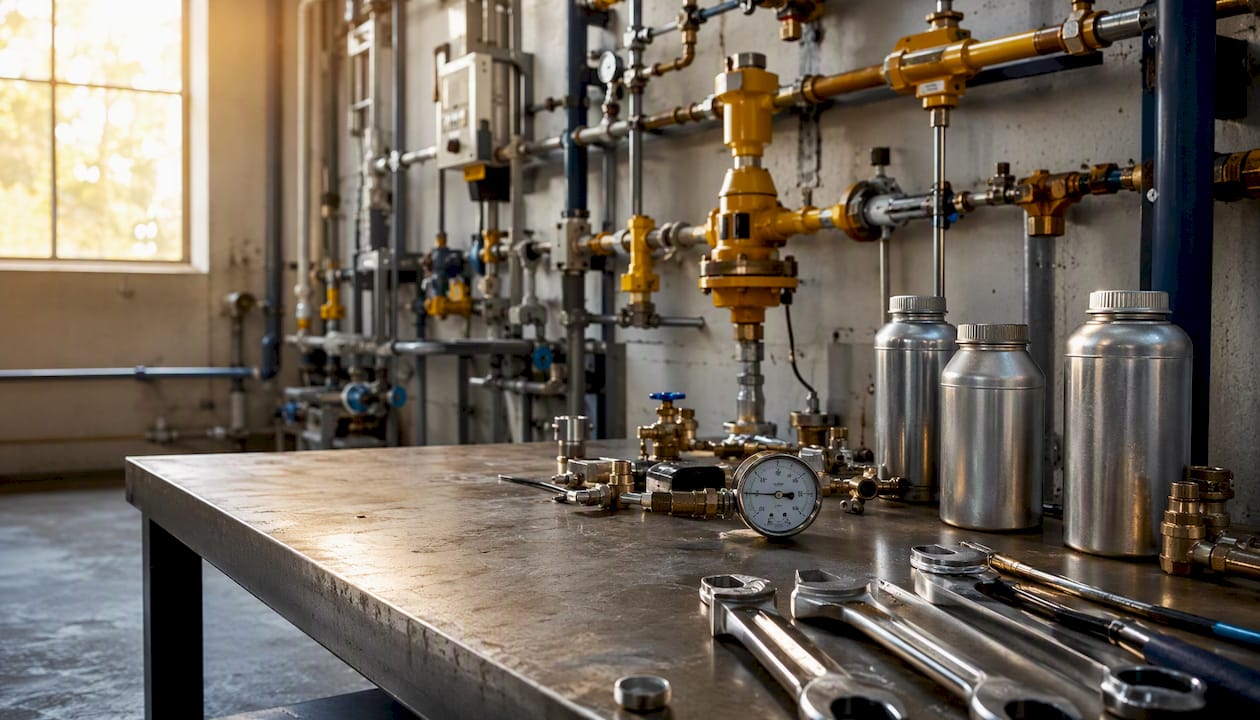
Pro Tip: Track meter readings at regular intervals and compare them against historical consumption for the same period. A sudden increase in gas consumption with no change in occupancy or weather often indicates a developing fault, a stuck valve or a leak, well before it becomes a safety incident.
Common compliance failures and the red flags to watch for
Most enforcement actions and safety incidents share a short list of root causes. Knowing them makes them avoidable.
Common mistakes:
- Using unregistered or under-qualified personnel, often to reduce cost
- Allowing inspection records to lapse, particularly during building refurbishments or management changes
- Ignoring flue or ventilation defects identified in a previous inspection without formal sign-off
- Deferring remedial works without documenting the decision and the risk assessment behind it
- Incomplete contractor vetting, accepting a Gas Safe card without checking the approved categories on the reverse
Red flags on site:
- Soot staining or discolouration around appliance casings, flue joints or terminals
- Unusual smells near gas meters, pipework or appliances
- Pilot flames that lift, fluctuate or extinguish without apparent cause
- CO alarms activating repeatedly or intermittently
- Flue terminals that are obstructed, corroded or inaccessible for inspection
When a red flag appears, do not wait for the next scheduled inspection. Isolate the appliance if it is safe to do so, ventilate the area, and call a competent engineer immediately. Document every action taken, including the time, the person who identified the issue and the engineer’s response. That record protects you and demonstrates responsible management.
If your pipework runs near areas subject to excavation or ground works, pipeline condition assessment guidance is worth reviewing to understand how third-party damage to buried services is identified and managed.
What to do if you suspect a gas leak or carbon monoxide incident
Speed and sequence matter. Follow these steps in order:
- Evacuate the affected area immediately. Do not stop to investigate the source.
- Do not operate any electrical switches, including lights. A spark can ignite accumulated gas.
- Isolate the gas supply at the emergency control valve if it is safe to reach without entering the affected area.
- Ventilate by opening doors and windows once people are clear.
- Call the National Gas Emergency Service on 0800 111 999 (for natural gas) or your LPG supplier’s emergency line. Do not re-enter the building until cleared by the emergency service.
- Call a competent commercial gas engineer to inspect and certify the system before it is returned to service.
- Notify your facilities or estates manager and record all actions taken, including times and names.
- Consider RIDDOR reporting if the incident resulted in injury or a dangerous occurrence as defined by HSE. Check HSE employer guidance for current thresholds.
- Keep emergency contact numbers for your gas supplier, your contracted engineer and Delta First’s emergency line in a centralised, accessible location, not just on one person’s phone.
Never assume a CO alarm is a false positive. Treat every activation as a real incident until a competent engineer confirms otherwise.
How to vet a gas contractor before you appoint them
A structured vetting process protects you legally and practically. Use this checklist when appointing or auditing any commercial gas contractor.
Documents to request:
- Gas Safe registration certificate and the engineer’s card (check the reverse for approved categories)
- Evidence of commercial qualifications relevant to your specific plant
- Current public liability insurance certificate (a sufficient level of public liability insurance appropriate for commercial work)
- Professional indemnity insurance certificate
- References or examples of comparable commercial work where available
Questions to ask:
- What commercial plant types have you serviced in the last 12 months?
- Can you provide a sample PPM schedule for a premises similar to ours?
- What is your standard turnaround for issuing inspection certificates after a visit?
- How do you handle remedial works that require a return visit?
- What is your emergency response time and do you offer out-of-hours cover?
What to include in your contract or statement of works:
- Defined call-out response times for emergency and non-emergency attendance
- Certificate delivery timescales (typically within 24–48 hours of inspection)
- Digital record format and access arrangements
- Clear escalation process for safety-critical faults
- Confirmation that all engineers attending site will hold current Gas Safe registration and the appropriate commercial qualifications
For guidance on selecting safety system contractors more broadly, Delta First’s fire system installer guide covers a comparable vetting framework that translates well to gas contractor selection.
How Delta First supports your commercial gas safety obligations
Delta First delivers planned preventative maintenance, reactive maintenance, emergency call-outs and compliance surveys for commercial gas systems across Essex, Suffolk, Norfolk and Greater London. Our directly employed engineers coordinate the work, with gas work itself carried out by Gas Safe registered engineers from our specialist subcontractor network who hold the commercial qualifications appropriate to the plant they service. Every visit produces a written inspection record delivered digitally, so your compliance file is always current.
What a Delta First site visit includes:
- Full asset register verification and update
- Inspection of all gas appliances, pipework and flues within scope
- Tightness testing, combustion performance checks and CO risk assessment
- Written record of all findings, faults and recommended remedial works
- A proposed PPM schedule with costs, aligned to your appliance types and usage patterns
Sectors we serve:
- Schools and educational estates
- NHS and healthcare facilities
- Hotels and hospitality venues
- Retail and commercial offices
- Industrial and manufacturing sites
- Local authorities and public sector estates
For sector-specific information, our hotels and hospitality page covers the particular demands of catering plant and high-use commercial kitchens.
Contact Delta First to request a compliance survey or discuss a PPM contract for your premises.
Why proactive gas safety governance is worth the investment
The compliance argument for annual inspections is clear. What gets less attention is the operational case for going further.
Reactive maintenance costs more than planned maintenance, every time. An unplanned boiler failure in a school in January or a catering kitchen shutdown during a busy service period carries costs well beyond the engineer’s call-out fee: lost productivity, reputational damage, potential enforcement action and, in the worst cases, harm to the people in your building. A structured PPM programme does not eliminate risk, but it reduces the probability of unplanned failure and gives you a documented record of responsible management.
The other underappreciated point is contractor accountability. Many duty-holders assume that engaging any Gas Safe-registered engineer discharges their legal duty. It does not. GSIUR and HSE guidance place the responsibility on the employer to verify that the engineer is competent for the specific plant involved. That distinction matters in enforcement proceedings and in insurance claims. A contractor who is registered but not qualified for your boiler type leaves you exposed, not them.
Delta First’s approach is to treat compliance as a continuous process, not an annual event. The survey, the schedule, the execution and the records form a single managed programme. That is what genuine accountability looks like in practice.
Arrange a commercial gas safety survey with Delta First
Delta First gives commercial property managers and facilities teams a single, accountable partner for gas safety compliance across Essex, Suffolk, Norfolk and Greater London. Gas work is carried out by Gas Safe registered engineers from our specialist subcontractor network, coordinated and managed by Delta First. Every inspection is documented digitally and delivered promptly, so your compliance file is always audit-ready.

Whether you need a one-off compliance survey to close a gap in your records or a fully managed PPM contract covering all your gas-served assets, we can scope and price the work quickly. Visit our building services glossary to clarify any technical terms, or contact us directly to request a site survey or quotation. Our team covers commercial offices, schools, NHS estates, hotels, retail and industrial sites across our service region.
Request a quotation or planned maintenance survey today by contacting Delta First through our website at Delta First.
Sources
The following official sources should be your first point of reference for statutory text, scope clarification and practical guidance:
- The Gas Safety (Installation and Use) Regulations 1998
- Safety in the installation and use of gas systems and appliances (ACOP L56)
- Competent person scheme: current schemes and how schemes are authorised
Check the HSE ACOP L56 for scope exceptions before treating any premises as exempt from GSIUR. For definitions of technical terms used in gas safety documentation, Delta First’s building services glossary is a useful reference.
This article is general information, not a substitute for advice from a qualified lawyer. Consult a qualified legal professional about your own circumstances before acting on anything here.
[…] That last point trips up more sites than it should: an alarm on the wall is not a substitute for an engineer on the schedule. Skipping records, or using an unregistered installer, doesn’t just risk enforcement action. It can invalidate insurance cover and expose staff and visitors to a genuinely preventable hazard. Full guidance on employer duties is set out in Delta First’s commercial gas safety overview. […]